

U.S. Solar Market 2025: Data Signals for Growth & Lead Generation For Solar Companies
Actionable data and marketing insights to help solar companies navigate industry shifts, generate high-quality leads, and build lasting customer trust
The U.S. solar market is entering a defining phase in 2025. Install volumes remain near record highs, module manufacturing capacity in the U.S. has already surpassed 50 gigawatts, and battery adoption is reshaping how projects are designed and sold.
At the same time, challenges such as grid interconnection backlogs, California’s new Net Billing Tariff, and the recent bankruptcies of high-profile providers are rewriting the playbook for growth. In this environment, winning is no longer just about operational execution, it’s about how solar companies market, generate leads, and build durable customer trust.


For installers, EPCs, and developers, the economics are shifting fast. Median solar system quotes have dropped to $2.50/W, residential electricity bills are climbing another 4% in 2025, and nearly half of all customers now add storage to their systems (with attachment rates nearing 80% in California).
These data points translate directly into new marketing messages: emphasizing resilience and bill control over “selling power back,” educating buyers on realistic payback periods, and demonstrating financial and operational stability in a consolidating industry.
That’s where digital marketing becomes a growth engine. From solar SEO strategies that capture intent-driven traffic, to solar PPC campaigns that target high-value prospects, to social media storytelling that builds brand credibility. Companies need more than market knowledge; they need a marketing partner who can convert industry shifts into customer acquisition opportunities. In other words, the future of solar growth will be defined as much by how you communicate and capture demand as by how you design and install systems.
This hub is built to provide both: a citable, data-rich briefing on the U.S. solar market, and clear explanations of what these market shifts mean for lead generation and sustainable growth. By pairing authoritative research with actionable marketing insights, we help solar businesses see not only where the industry is headed, but also how to position themselves to win.
U.S. Solar Installations & Demand Outlook
Why It Matters
Install volumes are the clearest signal of where customer demand is headed. For solar businesses such as installers, EPCs, and developers, knowing these numbers helps forecast lead generation potential in each segment (residential, commercial, utility).
Key Data Points
- 2024 residential solar installations declined 12% year-over-year due largely to California’s shift to the Net Billing Tariff (NEM 3.0)
- Despite that dip, total U.S. solar capacity grew 51% in 2023 to 32 GW, setting a new record
- 2025 is expected to stabilize: residential demand moderates in California but grows strongly in states with rising retail electricity rates and new tax credits
Marketing Implications
For solar companies, these numbers show two realities:
- Residential leads are shifting geographically. States outside California are picking up momentum, which means SEO and PPC campaigns should expand keyword targeting beyond “California solar” toward broader “solar near me” and state-specific phrases.
- Commercial & utility projects remain strong. Developers should emphasize credibility, project track record, and financing expertise in digital campaigns. Messaging that resonates with financiers and businesses seeking long-term savings.
- Policy-driven swings demand education-first marketing. Homeowners are confused about net metering changes. Explainer blog posts, landing pages, and educational videos optimized for search terms like “solar ROI 2025” or “Is solar worth it in [state]?” can capture intent traffic and build trust.
Solar Prices & Payback Periods
Why It Matters
Price transparency is one of the biggest drivers of solar adoption, and one of the most searched-for topics online. For solar businesses, talking clearly about system costs, financing, and payback periods builds trust and improves SEO visibility.
Instead of hiding behind “request a quote” buttons, companies that publish ballpark pricing data and ROI calculators generate more qualified leads and rank higher in search.

Key data points
Median Solar Quotes
Median solar quotes fell to $2.50/W in H2 2024, down 6.2% from H1 2024
Battery adoption raises system costs significantly
Paired solar plus storage quotes averaged $23,000–$28,000 compared to $14,000–$18,000 for solar-only
Average payback period
Average payback period in the U.S. is 8–12 years, with wide variation depending on state incentives and retail electricity prices
Rising electricity rates
(+4% projected in 2025) shorten the payback window and make financing more attractive
Marketing Implications
- SEO Opportunity: Target keywords like “solar panel cost 2025,” “solar ROI calculator,” “average solar payback period”. These are high-intent queries from motivated buyers.
- Lead Gen Strategy: Use calculators or downloadable guides (“2025 Solar ROI Guide”) as gated content to capture leads.
- Sales Enablement: Train sales teams to highlight value stability. Solar saves on bills regardless of market swings.
- Messaging for Battery Systems: Position storage not only as a resilience tool, but as an ROI accelerator in states with peak pricing or poor net metering.
Solar Energy Storage & Electrification Trends
Solar Energy Storage & Electrification Trends
Why it matters
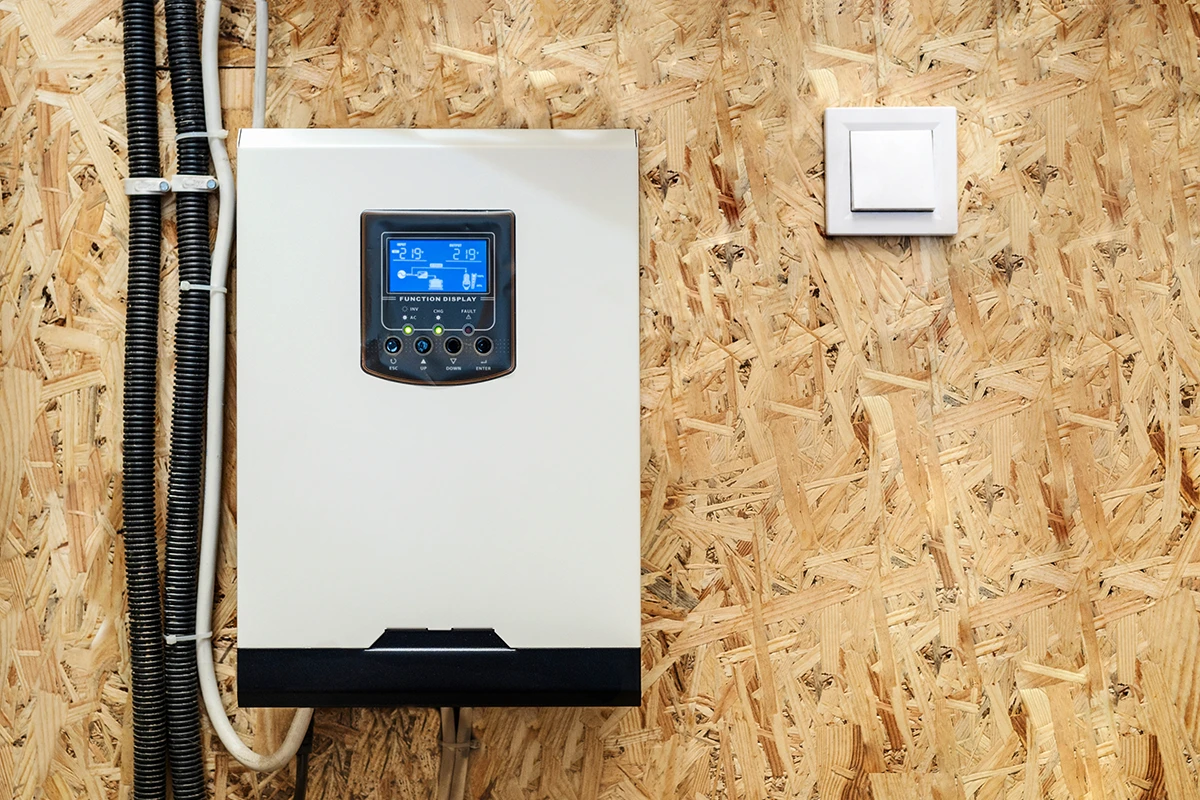
Storage isn’t a sidecar anymore. Falling quoted battery prices, California’s Net Billing (NEM 3.0) design, and broader electrification (data centers, EVs, heat pumps) are pushing solar + storage from “nice?to?have” to default in many proposals. For solar businesses, that changes offers, funnels, and messaging. From “sell back to the grid” to “backup + bill control + TOU optimization.”
Key data points
Attachment & interest are surging.
EnergySage reports 45% national battery attachment on selected quotes in H2?2024, with ~79% in California; 73% of shoppers expressed interest in batteries.
Record year for storage.
The U.S. added ~12.3 GW of energy storage in 2024 across segments, a new annual record; 2025 installations are projected to grow another ~25%.
Utility?scale keeps hybridizing.
LBNL’s Utility?Scale Solar 2024 documents rapid growth in PV + battery hybrids and queue dominance for solar+storage projects.
What this means for marketing & sales
- Lead with outcomes, not acronyms. Explain why a battery matters in 2025: it keeps the lights on, dodges peak prices, and reduces export losses under tariffs like NEM 3.0. (TOU = time?of?use rates that get expensive at certain hours.)
- Bundle by default. Make “solar + storage” your primary offer, with solar?only as a comparison?down. Use H2?2024 quoted medians to anchor price expectations.
- Segment by state/utility. In California (and any market with avoided?cost exports), emphasize self?consumption and backup; elsewhere, test messaging weight between resilience and bill control based on local TOU and outage history.
- For C&I & utility buyers. Reference hybrid PPAs and queue realities to show you understand project viability, curtailment risk, and schedule pressure. (Explain “hybrid” = PV coupled with batteries sharing a point of interconnection.)
Policy & Solar Energy Incentives
Why it matters
Policy drives demand in solar. For residential and small C&I, incentives can shave thousands off project costs, while for utility-scale developers, interconnection and IRA credits determine viability. For marketing, policy equals urgency messaging: businesses that communicate clearly about credits, deadlines, and eligibility attract higher-intent leads.

Key data points
Federal 30% ITC through 2032.
The Inflation Reduction Act extended the Investment Tax Credit (ITC) at 30% until at least 2032. Bonus credits apply for U.S. content, energy communities, and low-income projects.
Direct pay opens new markets.
Under IRA, nonprofits, schools, and municipalities can now benefit via direct pay instead of tax liability, creating a new customer segment.
California NEM 3.0 impact.
LBNL and EIA confirm California’s Net Billing Tariff (effective April 2023) cut export values but created incentives for storage adoption (covered in Section 3).
State-level divergence
Some states (NY, NJ, MA) continue offering strong SREC or rebate programs; others (FL, IN) face policy pushback, limiting residential economics.
Permitting & interconnection bottlenecks.
SEIA and DOE cite multi-year interconnection queues (1,200+ GW solar + storage capacity waiting nationally as of 2024). This affects utility-scale timelines and market sentiment.
What this means for marketing & sales
- Leverage “act now” messaging. ITC deadlines are far, but bonus credit eligibility windows are dynamic. Businesses can market urgency around limited-time SRECs or bonus adders (e.g., domestic content).
- Educate new buyer groups. With direct pay, schools, churches, and municipalities become viable solar customers for the first time. That’s a huge content and SEO angle: “Solar for Schools,” “Nonprofit Solar Financing.”
- Explain policy shifts in plain English. For NEM 3.0 or SREC-heavy markets, translate acronyms: “Net Energy Metering (NEM) determines how much you get paid for sending power back to the grid. California’s new rules reduced those payments, making batteries more attractive.”
- C&I and utility clients: Demonstrate awareness of interconnection queues and IRA tax equity, showing sophistication in project-level marketing.
Solar Permitting & Operations (SolarAPP+)
Why it matters
Permitting speed isn’t just an ops metric. It directly affects customer experience, cancellation rates, cash flow, and ultimately your lead-to-close conversion.
Cities that use SolarAPP+ (NREL’s automated permitting tool) typically move projects weeks faster, which means shorter sales cycles, better reviews, and more referrals you can showcase across SEO, PPC, and social.
Key data points
Adoption & scale
As of mid?2025, NREL reports 70,000+ permits issued via SolarAPP+ across ~270 jurisdictions in 13 states (program brief). Earlier annual reviews show the footprint steadily increasing.
Growing pipeline
The 2023 Performance Review documents rising AHJ interest (e.g., 750+ AHJs expressing interest; 160–170+ using or piloting through 2023), with yearly updates confirming expansion.
Product maturity
NREL’s 2025 Final Technical Report details enhancements (AHJ onboarding, training, and support), including permitting for residential battery storage, which matters as attachment rates climb.
What this means for marketing & sales (plain English)
- Make “speed to PTO” a proof point. If you operate in SolarAPP+ cities, say so clearly (and name them). “Typical projects move ~2 weeks faster” is a concrete value promise you can defend with citations.
- Reduce cancels with expectation?setting. Publish local timelines for SolarAPP+ vs. non?SolarAPP+ areas and use that in ads and proposals. Clear timelines ? buyer anxiety and improve close rates.
- Bundle storage confidently. SolarAPP+ now supports PV + battery permitting; pair this with your Section 3 messaging on resilience and TOU optimization.
- Civic partnerships = backlinks. Work with local permitting offices that adopted SolarAPP+ on co?authored guides or webinars — strong .gov/.org backlinks for your Solar SEO pages.
Solar Market Stability & Customer Trust
Why it matters
Prospects are reading headlines about solar companies restructuring or shutting down. If you don’t address it, they’ll fill the gap with fear. If you do address it, you reduce anxiety, protect conversion rates, and differentiate on professionalism.

Key data points
SunPower
SunPower filed for Chapter 11 on Aug 5, 2024 (Delaware)
Titan Solar Power
Titan Solar Power ceased operations in June 2024 and filed Chapter 7 (Arizona)
Sunnova
Sunnova filed Chapter 11 on June 8, 2025 continues operating during a court supervised sale.
Mosaic (Solar Mosaic)
Mosaic (Solar Mosaic) filed Chapter 11 on June 6, 2025 continues loan servicing during restructuring
What this means for your messaging & sales process
- Acknowledge the news, then explain protections. Add a short “How we protect you” section:
- Manufacturer warranties (panel/inverter) remain valid regardless of installer status.
- Workmanship warranty: who honors it if your company exited? Spell out transfer/assumption terms.
- Financing continuity: if a lender restructures (e.g., Mosaic), servicing usually continues; explain what that means (payments, portal access).
- Be transparent about service continuity. If you offer takeover/service?only programs for orphaned systems (e.g., ex?Titan/SunPower customers), publish that pathway and pricing. Cite that such events have occurred recently to justify the program’s existence.
- Explain dealer fees and APR trade?offs. Many complaints stem from opaque financing. A table that compares APR vs. dealer fee vs. payment reduces surprises and improves trust (and close rates).
- Set realistic timelines. If you handle C&I or community projects, reference interconnection realities and FERC reforms (from Section 5) so buyers see you’re grounded.
- Offer escrow where appropriate. For large jobs, milestone?based escrow reduces perceived counterparty risk and speeds signature.
What Happens Next
The U.S. solar market is growing, but it’s also becoming more complex. Policy changes, pricing shifts, interconnection delays, and even well-known bankruptcies are shaping how customers perceive the industry. For installers, EPCs, and developers, that means marketing can’t just be generic lead generation anymore. It has to be built on data, grounded in market realities, and crystal-clear about customer protections.
That’s where Digital Division comes in.
If your in-house team is already stretched thin or if you don’t have dedicated marketing staff, partnering with Digital Division gives you a specialist team focused exclusively on aligning marketing, sales, and customer messaging with real industry data.
From SEO and PPC to social campaigns and lead generation funnels, we help solar companies build trust, attract higher-quality leads, and convert interest into sustainable growth.
We don’t just run ads, we translate policy updates, financing shifts, and customer concerns into campaigns that resonate with homeowners, businesses, and institutions considering solar. In a market where trust is everything, having a partner who understands both the solar landscape and the digital marketing playbook is what separates the leaders from the rest.
Ready to grow with confidence?
Let’s talk about how Digital Division can help you connect market insights with marketing execution and position your solar business to thrive in 2025 and beyond.