

7 AI Marketing Trends That Will Shape 2026
AI is everywhere in marketing right now.
But here’s the surprising part:
Most marketing teams still haven’t fully operationalized it.
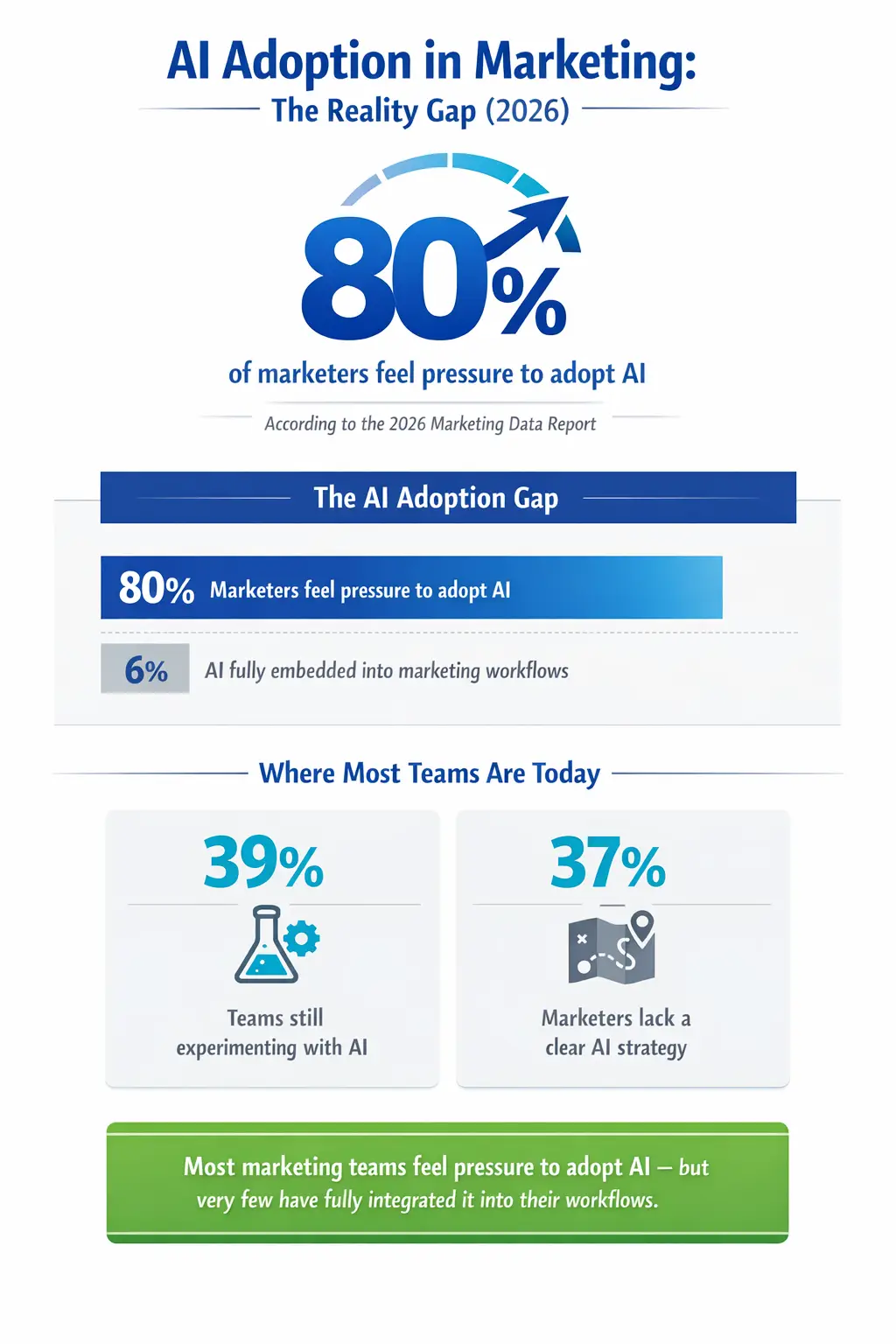
According to the 2026 Marketing Data Report, 80% of marketers feel pressure to adopt AI. Yet only 6% say AI is fully embedded into their workflows.[1]
This gap highlights an opportunity for forward-thinking marketing teams.
While many organizations are still experimenting with AI, agencies like Digital Division have already begun integrating AI tools into real marketing workflows—from content research and SEO analysis to campaign optimization and performance reporting.
By combining AI capabilities with strategic marketing expertise, teams can move beyond experimentation and start using AI to drive measurable marketing outcomes.
In other words:
AI adoption is accelerating.
But most teams are still figuring out how to actually use it effectively.
That gap is exactly where the biggest marketing opportunities are emerging.
Digital Division sees this shift every day when working with clients.
While many organizations are still experimenting with AI, our team has already integrated AI tools into several parts of our marketing workflow. We use AI to accelerate research, improve data analysis, and support campaign optimization—but never as a replacement for strategy.
In our view, AI works best when it supports human expertise, not when it tries to replace it.
That philosophy shapes how we approach modern marketing: combining AI-driven insights with experienced strategic thinking to deliver stronger results for our clients.
Because in 2026, success won’t come from simply using AI tools.
It will come from knowing how to apply AI strategically across your marketing ecosystem — from search visibility and personalization to data activation and ROI measurement.
At Digital Division, we’re already applying many of these AI-driven marketing strategies to help our clients improve performance, scale content, and make smarter marketing decisions.
In this guide, we’ll break down 7 AI marketing trends shaping 2026, backed by data from the latest industry research.
Let’s dive in.
Key Takeaways: AI Marketing Trends for 2026
- AI adoption is accelerating, but most companies are still experimenting
- AI workflows are shifting from automation to decision support
- SEO is evolving into AI visibility and answer engine optimization
- Connected marketing data is becoming a major competitive advantage
- Marketing measurement is moving toward model-driven analytics
- Data activation is replacing traditional reporting
- AI is making personalization at scale more achievable
Trend #1: AI Adoption Is Moving From Pressure to Practice
For the past few years, AI in marketing has been driven by urgency.
Teams felt pressure to adopt it quickly.
But many organizations are still in the early stages of actually using it effectively.
According to the 2026 Marketing Data Report, 80% of marketers say they feel pressure to adopt AI.[1]
Yet only 6% say AI is fully embedded into their marketing workflows.[1]
That gap tells us something important:
Most companies are still experimenting.
The AI Adoption Gap
| AI Adoption Reality | Percentage |
| Marketers feeling pressure to adopt AI | 80% |
| AI fully embedded in workflows | 6% |
| Teams still experimenting with AI | 39% |
| Marketers lacking clear AI strategy | 37% |
- 37% say they lack a clear AI strategy from leadership[1]
- 35% say they need more training to use AI effectively[1]
Trend #2: AI Workflows Get Smarter, Not Just Faster
Most marketing teams started using AI for one simple reason:
Speed.
But the biggest value of AI isn’t just doing things faster.
It’s helping marketing teams do better work.
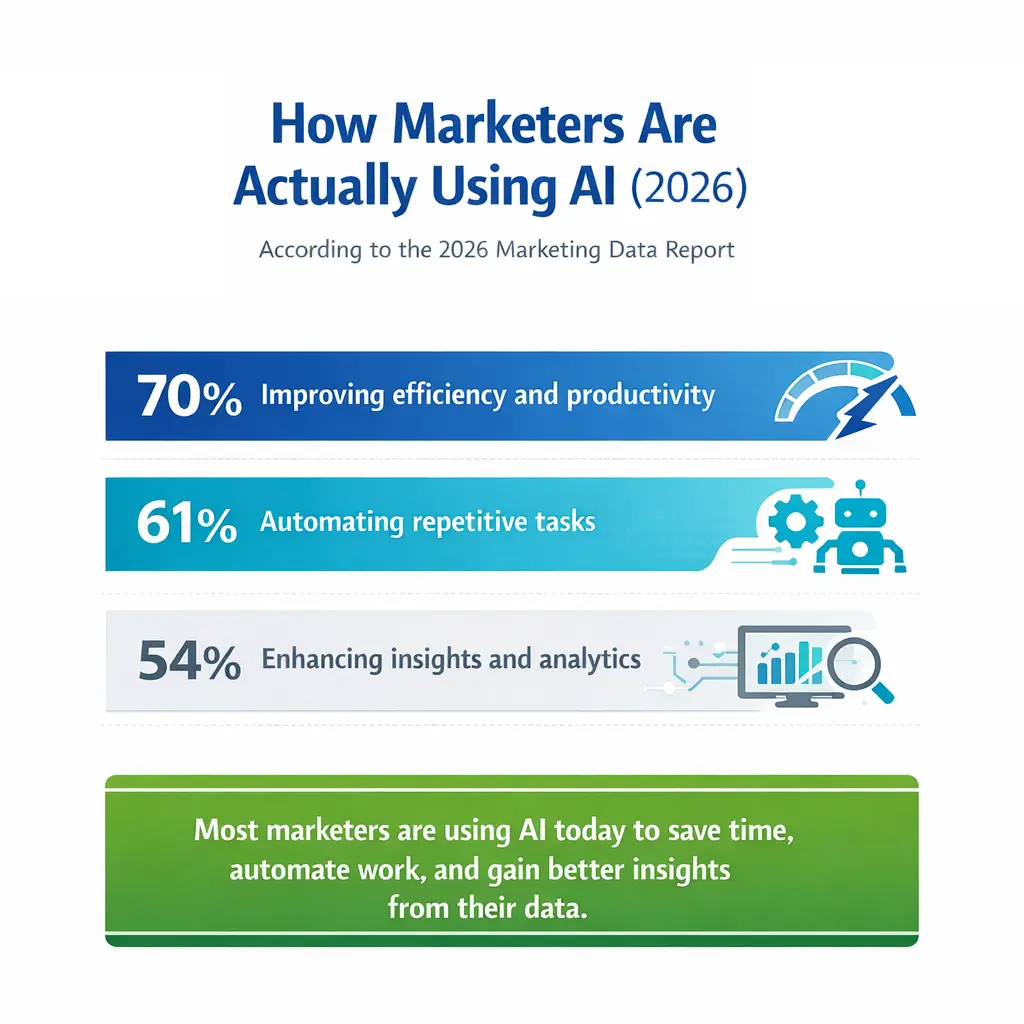
According to the 2026 Marketing Data Report, the most common ways marketers currently use AI are:
- 70% use AI to improve efficiency and productivity[1]
- 61% use it to automate repetitive tasks[1]
- 54% use it to enhance insights and analytics[1]
In other words, most teams are still using AI for operational support, not strategic advantage.
That’s about to change.
Trend #3: SEO Is Becoming AI Visibility
Search is changing faster than it has in the past decade.
Google, Bing, and other platforms are now integrating AI-generated answers directly into search results. Tools like ChatGPT and other AI search assistants are also becoming new discovery channels for users.[2]
That means one important thing for marketers:
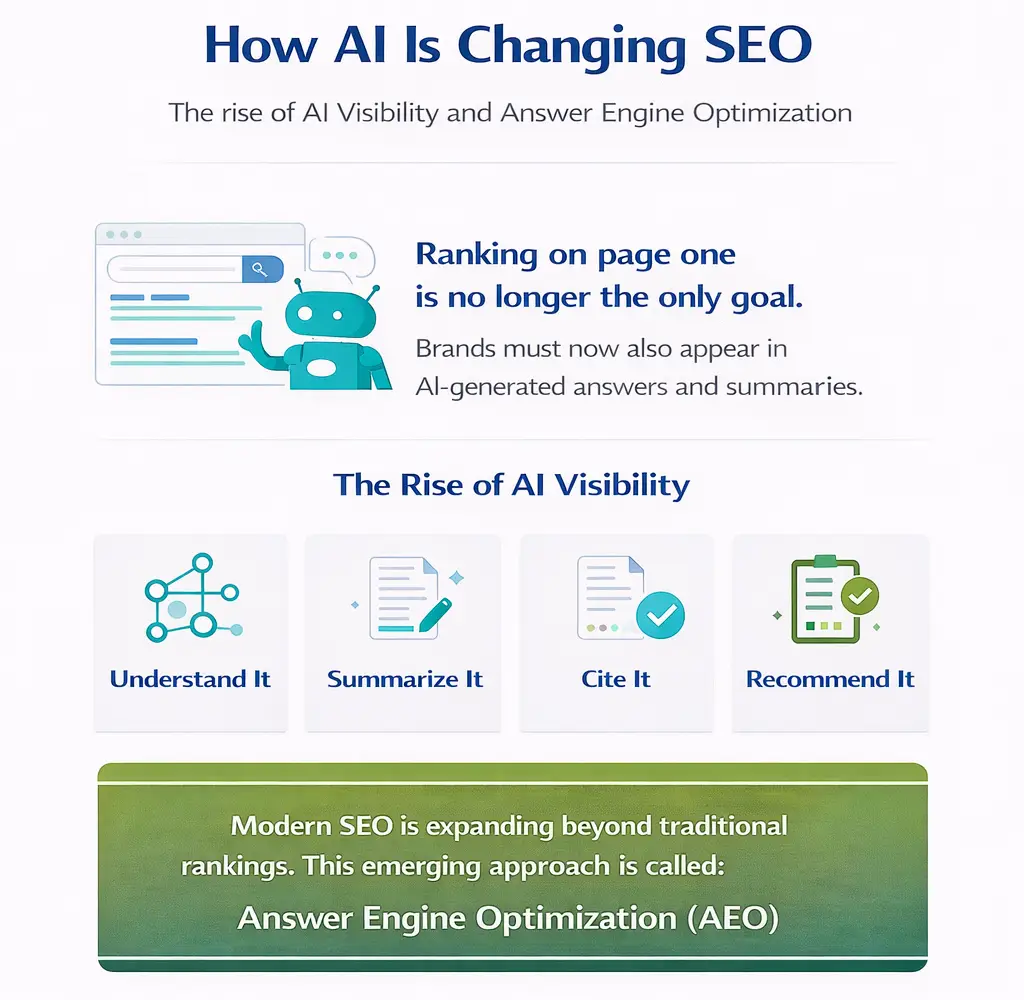
Ranking on page one is no longer the only goal.
Now brands also need to appear in AI-generated answers and summaries.
This shift is giving rise to a new concept in SEO:
AI visibility.
Instead of optimizing only for traditional search rankings, marketers are now optimizing content so AI systems can:
- Understand it
- Summarize it
- Cite it in responses
- Recommend it to users
This is often referred to as Answer Engine Optimization (AEO).[3]
Trend #4: Connected Data Becomes the Real Competitive Advantage
AI is only as powerful as the data behind it.
According to the 2026 Marketing Data Report, 87% of marketers say better data and analytics would significantly improve marketing performance.[1]
Yet many organizations still struggle with fragmented marketing data.
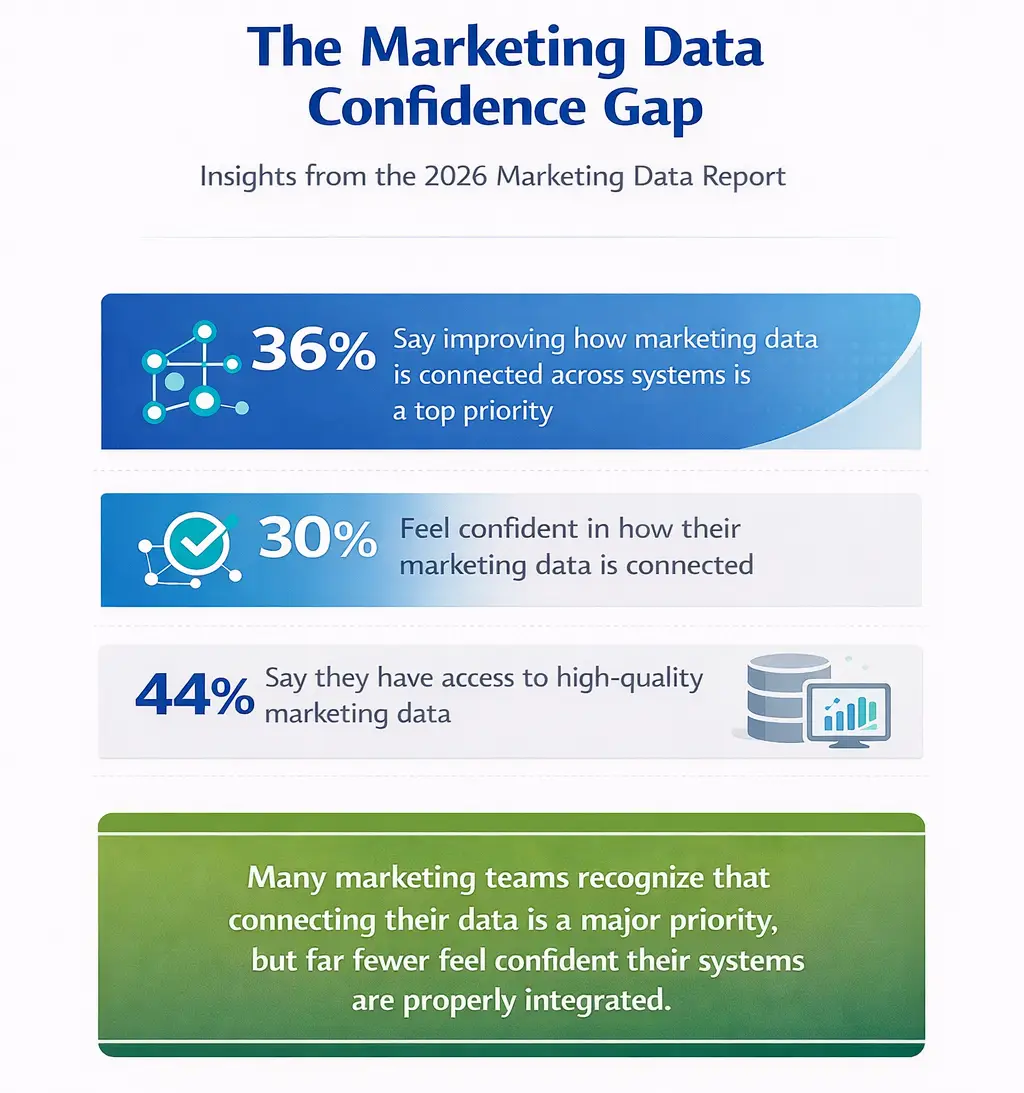
- 36% say improving how marketing data is connected is a top priority[1]
- Only 30% feel confident about how their data is connected[1]
- 44% say they have access to high-quality marketing data[1]
That disconnect limits the effectiveness of AI systems.
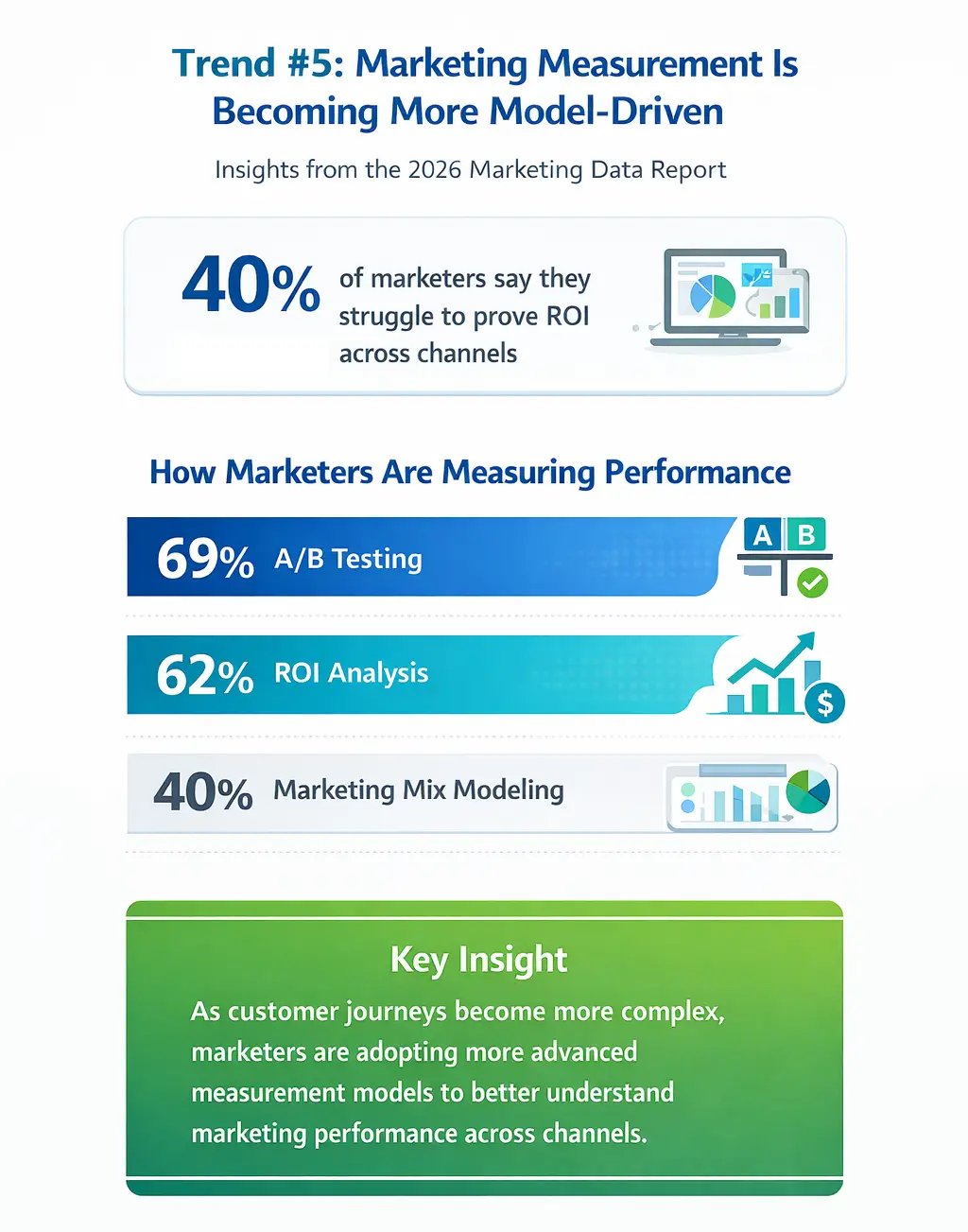
Trend #5: Marketing Measurement Is Becoming More Model-Driven
Proving marketing ROI has always been difficult.
According to the 2026 Marketing Data Report, 40% of marketers say they struggle to prove ROI across channels.[1]
To address this challenge, organizations are adopting more advanced measurement approaches.
- 69% use A/B testing[1]
- 62% rely on ROI analysis[1]
- 40% are prioritizing marketing mix modeling investments[1]
These model-driven approaches allow marketing teams to analyze performance across complex customer journeys.
Trend #6: Reporting Gives Way to Data Activation
Marketing teams have traditionally focused on reporting.
But the real opportunity lies in activating insights.
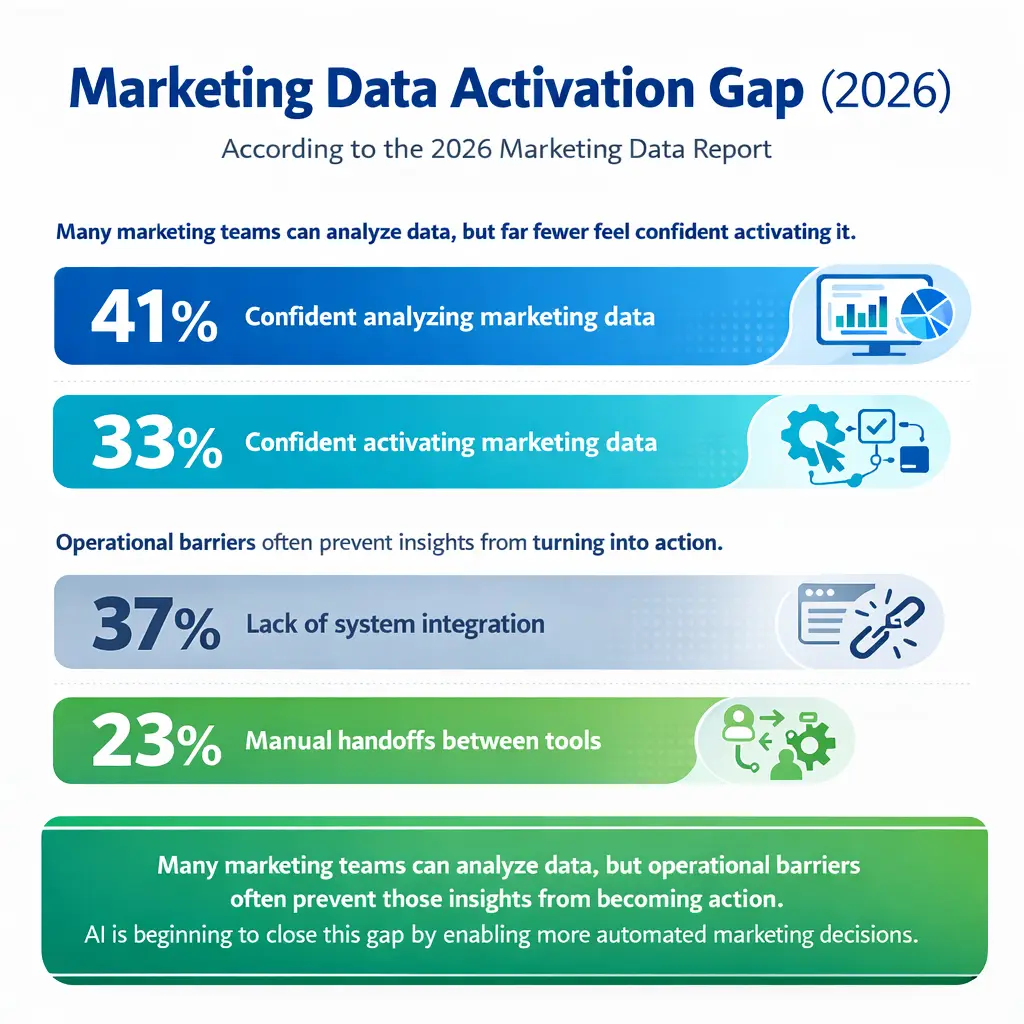
The report found that:
- 41% of marketers feel confident analyzing data[1]
- Only 33% feel confident activating it[1]
This gap highlights the need for stronger marketing systems and integrations.
Many teams still face operational barriers:
- 37% struggle with lack of system integration[1]
- 23% deal with manual handoffs between tools[1]
AI is beginning to close this gap by enabling more automated marketing decisions.
Trend #7: Personalization at Scale Finally Becomes Practical
Personalization at scale has long been a goal for marketers.
But it has been difficult to achieve.
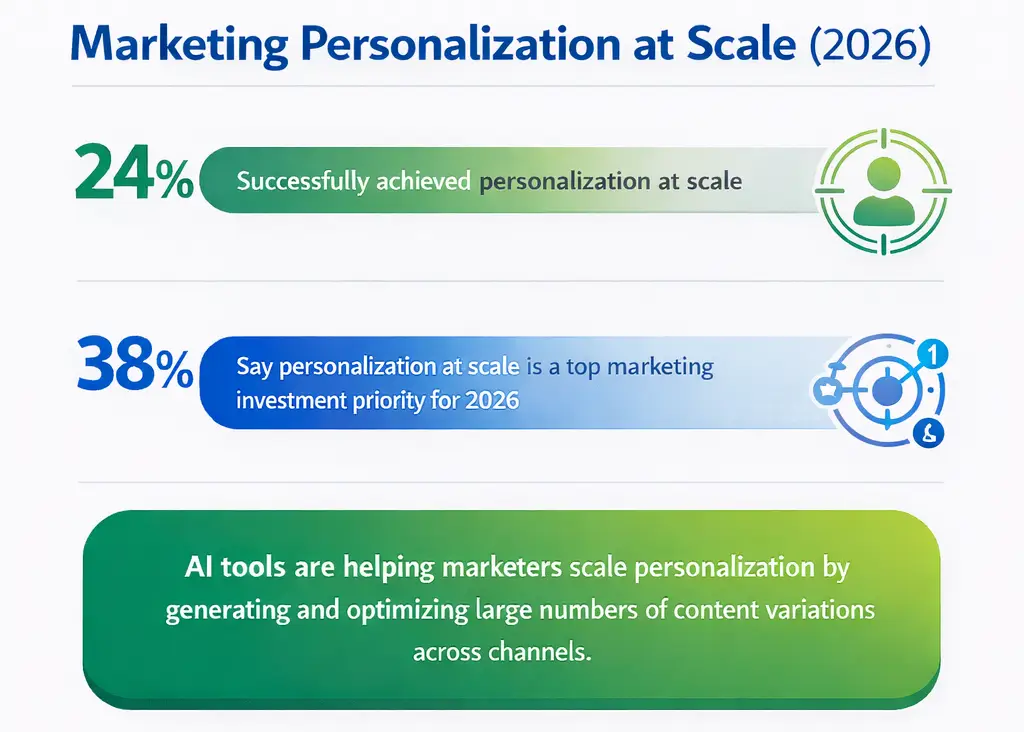
According to the 2026 Marketing Data Report, only 24% of marketers say they have successfully achieved personalization at scale.[1]
However, 38% say personalization at scale is one of their top marketing investment priorities for 2026.[1]
AI tools are helping marketers scale personalization by generating and optimizing large numbers of content variations.
How Authentic Storytelling Helps Brands Break Through the AI Noise
AI is making it easier than ever to produce content.
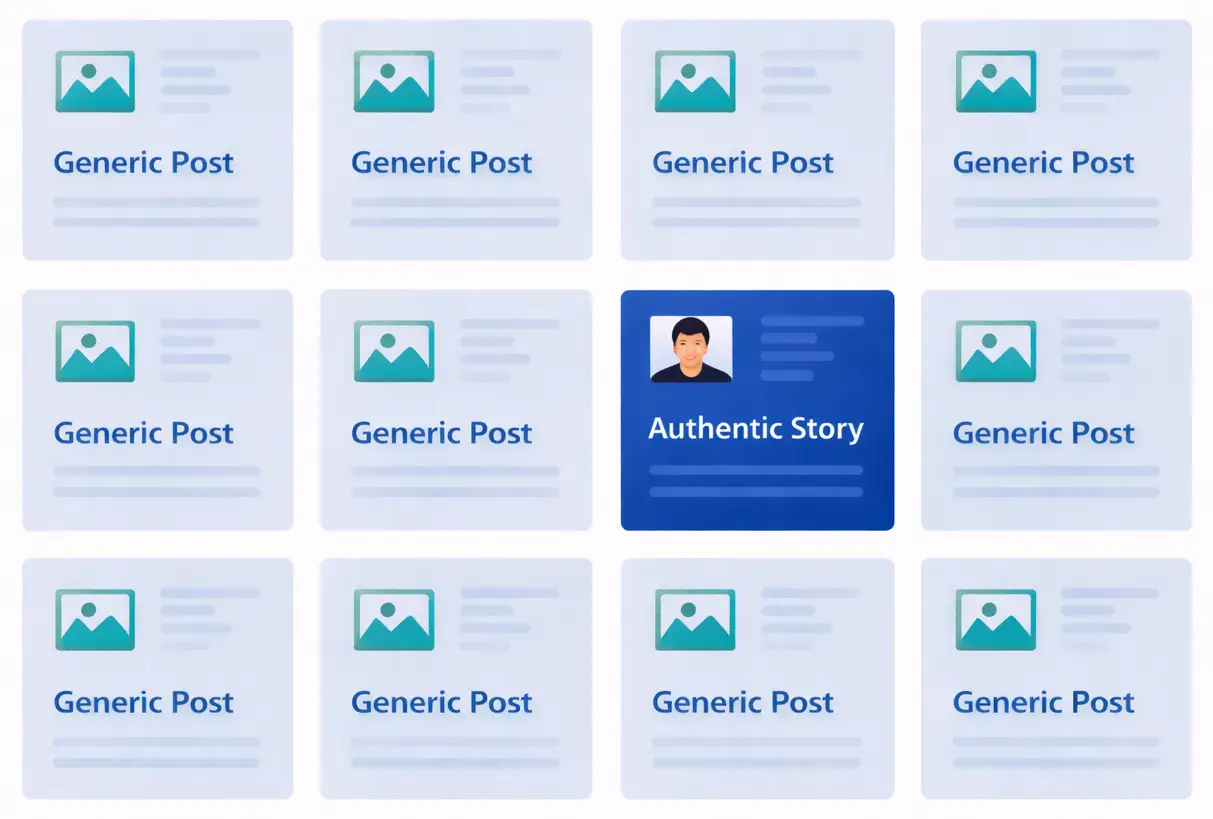
But that also means the internet is about to get a lot more crowded with generic content.
As more brands rely on AI to generate blogs, ads, and social posts, audiences are starting to see the same patterns everywhere.
Same tone.
Same structure.
Same ideas.
That’s where authentic storytelling becomes a competitive advantage.
Work With a Marketing Agency That Stays Ahead of the Trends
The marketing landscape is evolving faster than ever.
AI-powered search.
New data regulations.
Shifts in personalization and measurement.
At Digital Division, we stay on top of the latest AI marketing trends, search updates, and performance strategies so our clients don’t have to.
Our team combines:
- Data-driven marketing strategy
- Advanced SEO and AI visibility expertise
- Performance-focused paid advertising
- Content and creative services that drive engagement
Frequently Asked Questions About AI Marketing Trends
What are the biggest AI marketing trends in 2026?
The biggest AI marketing trends in 2026 include AI-powered workflows, AI visibility in search, connected marketing data, model-driven marketing measurement, data activation, and personalization at scale.
How is AI changing SEO and search visibility?
AI is changing SEO by introducing AI-generated search results and conversational search experiences. Brands must optimize content so AI tools can understand, summarize, and cite their information.
Why is connected marketing data important for AI?
AI tools rely on high-quality data to generate insights. Fragmented data limits AI’s ability to analyze performance or customer behavior.
Can AI improve marketing personalization?
Yes. AI enables marketers to create personalized content variations and optimize campaigns using behavioral data.
Should marketers rely entirely on AI for content creation?
No. AI can accelerate production, but authentic storytelling and original insights remain critical for building trust and brand differentiation.
Does Digital Division use AI in its marketing strategies?
Yes. Digital Division integrates AI into many parts of our marketing workflow, including research, content development, data analysis, and campaign optimization.
However, we view AI as a tool and not as a replacement for strategy. Our team combines AI capabilities with human expertise to deliver smarter insights, stronger messaging, and better marketing outcomes.
How does Digital Division use AI to improve marketing performance?
We use AI to enhance several areas of marketing, including market research, content development, SEO analysis, campaign optimization, and data interpretation.
AI helps us work more efficiently and uncover insights faster, but strategic thinking and creative direction always come from our team of experienced marketers.
Does using AI mean Digital Division replaces human creativity?
Not at all.
AI is most powerful when it supports human expertise. At Digital Division, AI helps accelerate research, surface insights, and streamline workflows, but the strategy, storytelling, and creative direction that drive successful marketing campaigns are still led by our team.
Can Digital Division help businesses implement AI into their own marketing systems?
Yes. Many companies are interested in using AI but aren’t sure where to start.
Digital Division helps organizations evaluate where AI can improve efficiency, connect marketing data, and support better decision-making, without overcomplicating their marketing systems.
Why does Digital Division emphasize strategy when discussing AI?
AI tools are only as effective as the strategy behind them.
Without clear goals, strong messaging, and connected marketing data, AI can generate more noise than results. Our focus is always on building the strategic foundation that allows AI tools to actually deliver meaningful impact.
Sources
[1] Supermetrics. Marketing Data Report 2026.
https://supermetrics.com/marketing-data-report-2026
[2] Google. AI Overviews and generative search experience documentation.
https://blog.google/products/search/generative-ai-search/
[3] Gartner. Answer Engine Optimization and the future of search.
https://www.gartner.com/en/marketing
DIGITAL MARKETING SOLUTIONS
Relax.
You've got a digital marketing partner.
Digital Division is a marketing agency with solutions that can help you generate leads and transform your business.