

How Agencies Identify Target Audiences for Smarter Social Media Advertising
Key Takeaways
- Target audience strategy goes beyond basic demographics.
- Strong agencies use customer goals, brand personality, industry research, and platform behavior to guide targeting.
- Audience segmentation helps campaigns feel more relevant and effective.
- Retargeting and lookalike audiences help brands reach both warm and new customers.
- First-party data and engagement insights improve targeting accuracy over time.
- The best audiences are adaptable, segmented, and evolving.
Why Audience Selection Matters in Social Media
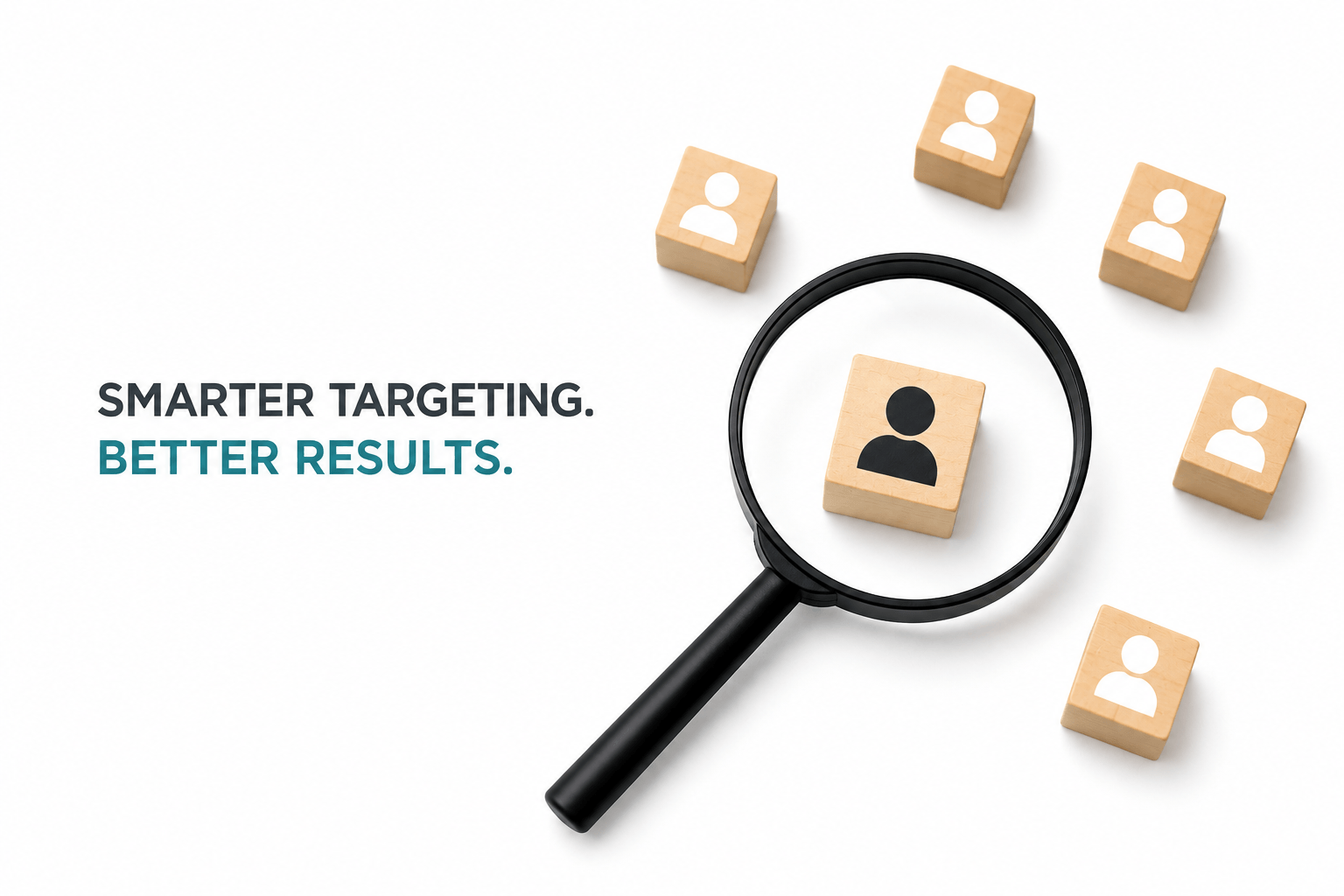
Most brands know they need to reach the right people. The harder part is knowing who those people actually are, where they spend time, and what message will make them pay attention.
That is where audience strategy comes in.
A target audience is more than an age range, location, or list of interests. It is a defined group of people who are most likely to connect with your brand, need what you offer, and take action when they see the right message.
And today, that audience is almost certainly online. DataReportal reports that there are 5.66 billion active social media user identities worldwide, representing about 68.7% of the global population (1). But more access does not automatically mean better results. When almost everyone is reachable, the real advantage comes from knowing who is worth reaching.
Platform behavior matters too. Pew Research Center found that U.S. adults use platforms differently, with 84% using YouTube, 71% using Facebook, 50% using Instagram, and 37% using TikTok (2). A person may be active on several platforms, but they are not always in the same mindset on each one.
That is why experienced agencies do not build campaigns around broad assumptions. They look at the customer goals, the brand personality, the industry, and the platforms before deciding who to target.
At Digital Division, audience targeting is built to be adaptable, segmented, and evolving. With 14 years of social media advertising experience, we know the best audiences are not guessed once and left alone. They are researched, tested, monitored, and refined over time.
Because better targeting does not just help ads reach more people.
It helps them reach the people most likely to care.
What Agencies Look at Before Building an Audience
Before an agency builds an audience, it has to understand what the brand is trying to accomplish.
A campaign built for awareness will not use the same audience strategy as a campaign built for lead generation, online sales, event sign-ups, or customer retention. The goal shapes the audience, the platform, the message, and the way performance is measured.
That is why strong audience targeting starts with four core inputs:
| Input | What it helps define |
| Customer goals | What action matters |
| Brand personality | How to speak to people |
| Industry | Where opportunities exist |
| Platforms | Where the audience is active |
Customer goals come first. Is the brand trying to introduce itself to new people? Reconnect with past customers? Drive purchases? Fill a lead pipeline? Increase local foot traffic? Each goal requires a different audience approach.
Brand personality matters too. A bold, playful consumer brand may need a very different targeting and messaging strategy than a professional service firm, healthcare brand, nonprofit, or B2B company. The audience is not just a group of people who could buy. It is a group of people who are likely to respond to the way the brand shows up.
Agencies also look closely at the industry. This includes competitors, customer behavior, seasonal trends, pain points, and gaps in the market. Sometimes the best audience is obvious.
Other times, research reveals a valuable segment the brand has not been speaking to clearly enough.
Many agencies also use social listening to understand how audiences talk about brands, industries, competitors, and trends online. Those insights can help uncover new audience opportunities and stronger messaging angles.
Personalization is part of this process, but it has to be handled carefully. McKinsey reports that 71% of consumers expect personalized interactions, and 76% get frustrated when they do not happen (3). At the same time, Salesforce reports that 71% of customers feel increasingly protective of their personal information (4).
That balance is important.
Good targeting should make ads feel more relevant, not more invasive. The goal is to understand the audience well enough to create better messaging, stronger creative, and a smoother path from first impression to action.
At Digital Division, this is where the process starts: customer goals, brand personality, industry research, and platform fit. Once those pieces are clear, audience segments can be built with more confidence.
How Agencies Turn Research into Audience Segments
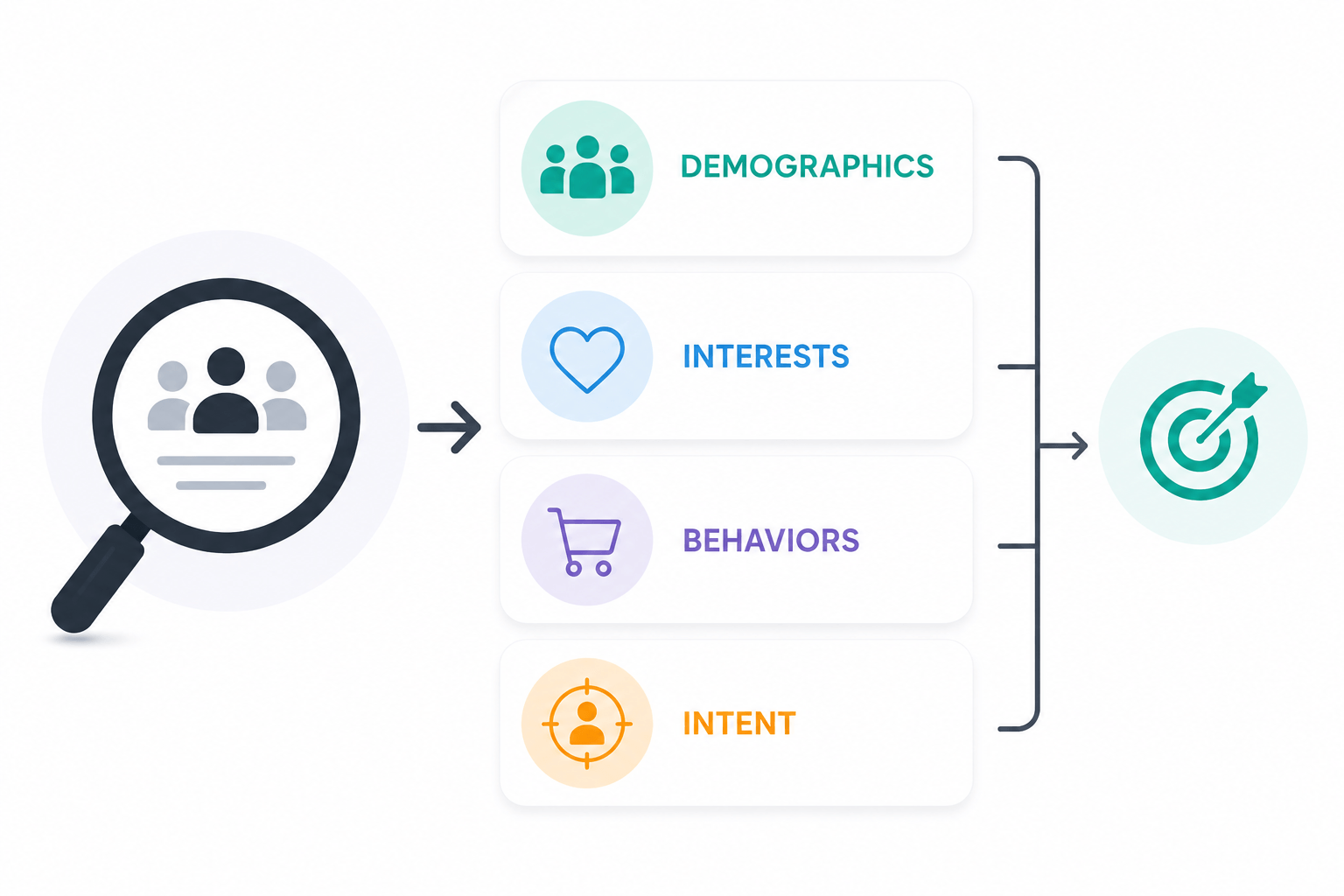
Once the strategy is clear, the next step is to turn audience research into usable audience segments.
This is where agencies move from a broad idea like “homeowners” or “young professionals” into more specific groups that can be tested, measured, and improved.
A strong audience segment should be specific enough to guide the message, but not so narrow that the campaign has no room to learn. The goal is to create groups that reflect how people actually think, behave, and make decisions.
Agencies typically look at a mix of audience signals:
| Signal | Example |
| Demographics | Age, location, income |
| Interests | Hobbies, brands, topics |
| Behaviors | Website visits, purchases |
| Intent | Searches, inquiries, clicks |
Demographics are often the starting point, but they are rarely the full strategy. Two people can be the same age, live in the same city, and have completely different reasons for engaging with a brand.
That is why agencies also look at interests, behaviors, and intent.
For example, a brand may want to reach people who are interested in home improvement. But within that audience, there may be first-time homeowners, DIY hobbyists, luxury remodelers, real estate investors, and people preparing to sell their homes. Each group may need a different message.
The same idea applies across industries. A healthcare campaign, a nonprofit campaign, a retail campaign, and a professional services campaign may all use audience targeting, but the audience logic behind each one should be different.
Google Ads describes audience segments as groups of people who can be reached based on who they are, their interests and habits, what they are actively researching, or how they have interacted with a business.5 That range of signals is important because it gives agencies more than one way to define relevance.
A person might be part of a target audience because they match a demographic profile. They might also be part of it because they visited the website, watched a video, joined an email list, clicked an ad, or searched for a related service.
The best agencies use those signals to create segmented campaigns instead of relying on one general audience.
That could include:
Cold audiences
People who may not know the brand yet, but match the desired customer profile.
Warm audiences
People who have already engaged with the brand through the website, social media, video views, email, or past campaigns.
High-intent audiences
People showing signs that they are closer to taking action, such as searching, comparing, clicking, submitting forms, or returning to key pages.
Existing customers
People who already have a relationship with the brand and may be ready to buy again, refer someone, upgrade, donate, or re-engage.
At Digital Division, segmentation is not about making the audience complicated. It is about making it clearer.
From demographics to interests to behavior, the goal is to define the audience better than it has ever been defined — then build campaigns that speak to each segment with purpose.
How Retargeting and Lookalike Audiences Expand Reach
Once audience segments are built, agencies can use existing customer data to make targeting more precise.
This is where first-party data becomes valuable.
First-party data is information a brand collects directly from its own audience, such as website activity, customer email lists, form submissions, purchase history, or social media engagement. When used responsibly, it helps agencies understand who is already interested and how to reach more people like them.
Google notes that advertisers can use their own data segments to re-engage people who have previously interacted with their brand or services.6 Meta also allows businesses to create Custom Audiences from sources like customer lists, website or app traffic, and engagement across Meta technologies.7
In simple terms, this helps agencies separate audiences into two important groups:
| Audience type | Purpose |
| Retargeting | Reconnect with warm users |
| Lookalikes | Find similar new users |
| Email lists | Activate known customers |
| Pixel data | Track site engagement |
Retargeting focuses on people who already know the brand. They may have visited the website, clicked an ad, watched a video, added something to a cart, filled out part of a form, or engaged with social content.
These people are often more valuable than a completely cold audience because they have already shown some level of interest.
Lookalike audiences are different. They help brands reach new people who share similarities with an existing customer group. For example, an agency may use a customer email list or a high-value website audience as the starting point, then build a lookalike audience to reach new people with similar traits.
This is one reason customer lists and tracking pixels are so important. They give the campaign a stronger foundation than guesswork.
Research from BCG, cited by Google, found that marketers who effectively use first-party data can generate double the incremental revenue from a single ad placement, communication, or outreach (8).
But the key word is effectively.
A strong agency does not upload a list, launch a campaign, and hope for the best. It looks at the quality of the data, the size of the audience, the campaign goal, and the message each audience should receive.
At Digital Division, this is part of making audiences more adaptable. We use tracking pixels to retarget engaged customers, customer email lists to build stronger lookalike audiences, and ongoing performance analysis to keep refining who we reach next.
The goal is not just to find more people.
It is to find more of the right people.
Digital Division’s Process for Defining Better Audiences
At Digital Division, audience targeting starts with strategy, not assumptions.
Before we build an audience, we look at the customer goals, the brand personality, the industry, and the platforms. Each of those pieces matters because a strong audience strategy is not just about who a brand wants to reach. It is about who is most likely to care, where they are paying attention, and what kind of message will move them to act.
With 14 years of social media advertising expertise, Digital Division knows that the best audiences are not built from one data point. They are built through research, segmentation, testing, and ongoing refinement.
Our process is designed to make audiences more adaptable, segmented, and evolving.
Adaptable audiences
Audience behavior changes. Platforms change. Campaign performance changes.
That is why we do not treat audience targeting as a one-time setup task. We continuously monitor engagement and analyze performance to understand which audiences are responding, which ones need adjustment, and where there may be new opportunities to grow.
If one audience is clicking but not converting, that tells us something. If another audience is converting at a stronger cost per result, that tells us something too. Those insights help us adjust audience targeting throughout the campaign, instead of relying on the original setup forever.
Segmented audiences
A single broad audience usually cannot do everything.
Someone discovering a brand for the first time should not always see the same message as someone who has visited the website, engaged with social content, joined an email list, or made a past purchase.
That is why Digital Division builds segmented audiences based on where people are in the customer journey.
| Segment | Message focus |
| New audience | Introduce the brand |
| Engaged audience | Build trust |
| High-intent audience | Encourage action |
| Existing customers | Reconnect or upsell |
This is also where first-party data becomes powerful. We use tracking pixels to retarget current engaged customers, helping brands stay in front of people who have already shown interest. We can also use customer email lists to generate lookalike audiences, allowing campaigns to reach new people who share similarities with existing customers.
That combination helps brands reconnect with warm audiences while also bringing new people into the brand.
Evolving audiences
The best audience strategy improves as the campaign runs.
Digital Division researches the industry to understand where the audience is active, what competitors may be missing, and where new audience opportunities may exist. From demographics to interests to behaviors, we define audiences with more clarity and purpose.
But we do not stop once the campaign launches.
We continue reviewing performance, monitoring engagement, and refining audience segments based on real campaign data. That ongoing process helps each campaign become smarter, more efficient, and more aligned with the people most likely to respond.
For Digital Division, better targeting comes down to one clear idea:
Define the audience clearly. Speak to each segment with purpose. Keep improving based on performance.
That is how audiences become more than a setting inside an ad platform.
They become a strategy.
Better Audiences Build Better Campaigns
Strong social media advertising does not start with a guess. It starts with understanding.
The right audience strategy connects customer goals, brand personality, industry research, platform behavior, and real performance data. It uses what a brand already knows — from website engagement to customer lists — while continuing to test new opportunities and improve over time.
That is what makes audience targeting more than a setup step.
It becomes an ongoing strategy for reaching the people most likely to care, engage, and take action.
At Digital Division, we define audiences with purpose. We look at who your customers are, how they behave, where they spend time, and what message is most likely to move them forward.
Because the best audiences are not static.
They are adaptable, segmented, and evolving.
And when your audience is defined better, your campaigns have a stronger foundation from the start.
Why Choose Digital Division for Audience Targeting
Setting up audience targeting can feel simple at first.
Most ad platforms make it easy to choose locations, ages, interests, and placements. But strong audience targeting is not just about filling in campaign settings. It is about knowing which audience makes sense for the goal, how each segment should be reached, and when the data is telling you to adjust.
That is where the right agency partner makes a difference.
At Digital Division, we do more than launch ads. We help brands understand who they should be talking to, where those people are spending time, and what kind of message is most likely to move them forward.
Our team looks at the full picture:
- Customer goals
- Brand personality
- Industry opportunities
- Platform behavior
- Website and engagement data
- Customer lists
- Retargeting opportunities
- Lookalike audience potential
- Ongoing campaign performance
This gives every campaign a stronger foundation.
Instead of relying on one broad audience, Digital Division builds targeting strategies that are clear, segmented, and designed to improve. We use data to reconnect with people who already know your brand, identify new people who may be a strong fit, and keep refining audiences based on what is actually happening inside the campaign.
So if your audience targeting feels too broad, too limited, too expensive, or too unclear, you do not have to figure it out alone.
Digital Division is here to help you define the right audience, build smarter campaigns, and create a targeting strategy that can grow with your brand.
Frequently Asked Questions About Social Media Audience Targeting
How do agencies choose target audiences?
Agencies choose target audiences by looking at the campaign goal, brand personality, industry, customer behavior, and platform fit. They also use audience signals like demographics, interests, behaviors, website activity, and customer data to build more specific segments.
What makes a target audience effective?
An effective target audience is specific enough to guide the message, but broad enough for the campaign to learn. It should connect to the brand’s goals, match the customer journey, and give the campaign a clear direction.
Why is audience segmentation important?
Audience segmentation helps brands avoid using one message for everyone. A new customer, an engaged website visitor, and an existing customer may all need different messaging. Segmentation makes campaigns more relevant by matching the audience to the right message and next step.
What is retargeting?
Retargeting is a strategy that helps brands reconnect with people who have already interacted with them. This can include website visitors, video viewers, social media engagers, email subscribers, or people who started but did not complete an action.
What are lookalike audiences?
Lookalike audiences help brands reach new people who share similarities with an existing customer group. For example, a brand may use a customer email list or engaged website audience as the starting point, then create a lookalike audience to find new people with similar traits.
How often should audience targeting be adjusted?
Audience targeting should be reviewed throughout the campaign. If an audience is generating engagement but not conversions, or if another audience is performing more efficiently, those insights can guide adjustments. Strong audience targeting is not static. It should evolve based on campaign performance.
What should I do if my ads are reaching the wrong people?
If your ads are reaching the wrong people, the issue may be audience setup, campaign objective, platform choice, creative, messaging, or tracking. Digital Division can help review your audience targeting, identify gaps, and build a clearer strategy around the people most likely to care, engage, and take action.
Sources
- DataReportal, Digital 2026 Global Overview Report — global social media user identities, social media adoption, and social ads as a brand-awareness driver.
https://datareportal.com/reports/digital-2026-global-overview-report - Pew Research Center, Americans’ Social Media Use 2025 — U.S. social platform usage by platform and age group.
https://www.pewresearch.org/internet/2025/11/20/americans-social-media-use-2025/ - McKinsey & Company, The value of getting personalization right — or wrong — is multiplying — consumer personalization expectations and revenue impact.
https://www.mckinsey.com/capabilities/growth-marketing-and-sales/our-insights/the-value-of-getting-personalization-right-or-wrong-is-multiplying - Salesforce, State of the Connected Customer — customer privacy concerns and personalization expectations.
https://www.salesforce.com/eu/resources/research-reports/state-of-the-connected-customer/ - Google Ads Help, About audience segments — how advertisers can reach people based on characteristics, interests, research behavior, and prior interactions.
https://support.google.com/google-ads/answer/2497941 - Google Ads Help, About your data segments — how advertisers can use their own data to re-engage people who previously interacted with a brand.
https://support.google.com/google-ads/answer/2453998 - Meta Business Help Center, About Custom Audiences — customer list, website, app, and engagement sources for Custom Audiences.
https://www.facebook.com/business/help/744354708981227 - Google Business, Power your ad privacy strategy with first-party data — first-party data strategy and BCG-cited revenue impact.
https://business.google.com/us/privacy/strategy/
DIGITAL MARKETING SOLUTIONS
Relax.
You've got a digital marketing partner.
Digital Division is a marketing agency with solutions that can help you generate leads and transform your business.